

Thermal management challenges in modern industries require precision-engineered solutions to ensure efficiency and reliability. SIC COATING and TAC COATING technologies provide manufacturers with the ability to customize material thickness to meet specific thermal demands. Industries like solar PV manufacturing have experienced a 22% surge in orders for GRAPHITE SUSCEPTOR products with SIC COATING due to their exceptional heat resistance and durability. Additionally, CVD TAC COATING applications in diamond wire sawing systems enhance tool life by up to 60%, significantly reducing production costs for solar cells. Ningbo VET Energy Technology Co., Ltd utilizes cutting-edge CVD SIC COATING and CVD TAC COATING techniques to deliver tailored solutions, guaranteeing optimal performance across a wide range of applications.
Key Takeaways
- Adjusting TaC/SiC coating thickness improves heat control and strength, which is crucial for tough jobs.
- Important things like heat flow and material matching affect how well coatings work.
- Modern methods like Chemical Vapor Deposition (CVD) help control coating thickness and quality perfectly.
- Fields like space travel and solar power gain a lot from custom coatings, making them work better and cost less.
- Ningbo VET Energy Technology Co., Ltd focuses on creating custom coatings to ensure top performance in many industries.
Understanding SiC Coating and TaC/SiC Materials
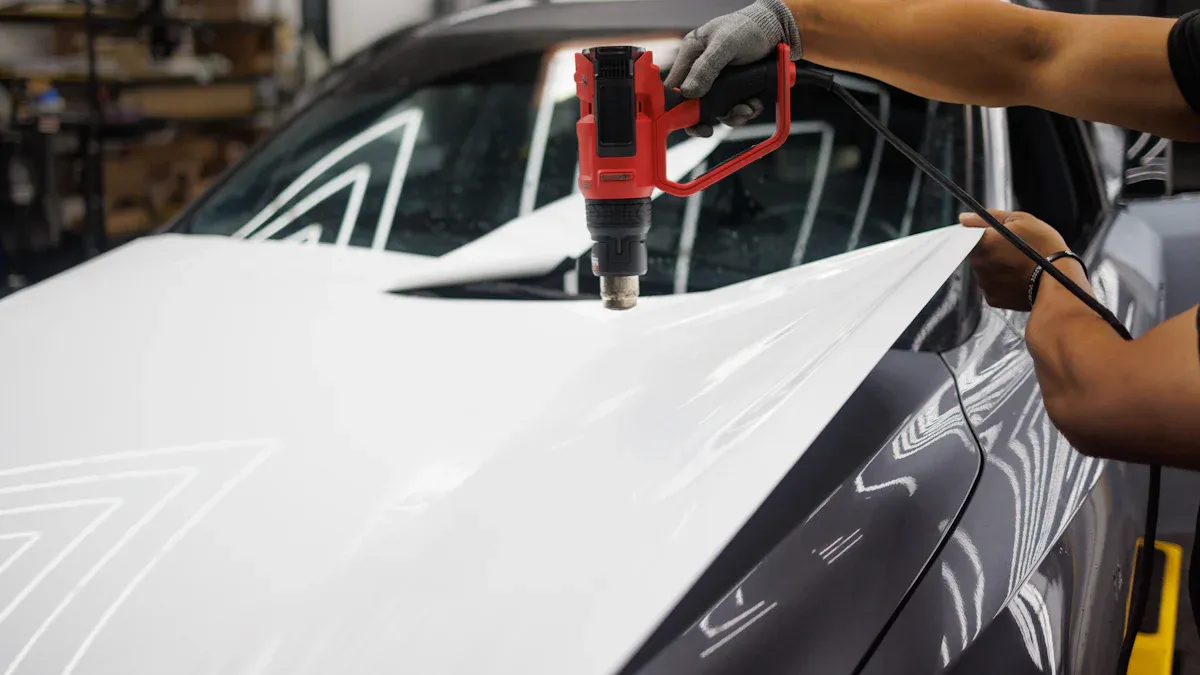
Thermal Properties of SiC Coating and TaC/SiC
Silicon Carbide (SiC) and Tantalum Carbide (TaC) coatings exhibit exceptional thermal properties, making them indispensable in advanced engineering applications. SiC coatings are renowned for their high thermal stability and oxidation resistance, which enable them to perform reliably under extreme temperatures. TaC coatings, with a thermal conductivity of 22 W·m-1·K−1, provide efficient heat dissipation, ensuring consistent performance in high-demand environments.
The comparative performance of engineered coatings highlights their advantages. For instance, Environmental Barrier Coatings (EBC) with Yb2SiO5 demonstrate higher coefficients of thermal expansion (CTE) and longer cycling times before delamination compared to standard EBCs. These properties enhance adhesion lifetimes and improve substrate interactions, making them ideal for applications requiring durability and precision.
Applications Requiring Tailored Thermal Profiles
Industries such as aerospace, automotive, and power generation rely heavily on tailored thermal profiles to optimize operational efficiency. In aerospace, high-performance coatings like SIC COATING extend aircraft lifespan and improve operational reliability. The aerospace coatings market, valued at $1.05 billion in 2024, is projected to grow at a CAGR of 6.62%, driven by increasing demand for advanced materials.
Tailored coatings also play a pivotal role in heat treatment processes for ceramics and metals. They provide reliable temperature profiles, ensuring compliance with industry standards. Statistical analysis of real-world temperature data enables the creation of robust thermal profiles, enhancing precision in manufacturing.
Ningbo VET Energy Technology Co., Ltd leverages its expertise in SIC COATING and TaC/SiC technologies to deliver customized solutions for diverse industrial applications. By addressing specific thermal requirements, the company ensures optimal performance and reliability across various sectors.
Key Factors Influencing Coating Thickness
Thermal Conductivity and Heat Resistance
The thermal conductivity and heat resistance of TaC/SiC coatings play a pivotal role in determining their thickness. Materials with higher thermal conductivity, such as TaC, efficiently dissipate heat, reducing the risk of thermal stress. This property is particularly beneficial in applications requiring consistent performance under extreme temperatures. SiC coatings, known for their exceptional heat resistance, provide a stable barrier against oxidation and thermal degradation.
Engineers often analyze the thermal conductivity of the coating material to optimize thickness. Thicker coatings may be required for applications involving prolonged exposure to high temperatures, while thinner layers suffice for moderate thermal conditions. Ningbo VET Energy Technology Co., Ltd employs advanced analytical techniques to ensure the precise customization of SIC COATING thickness, meeting diverse industrial requirements.
Operating Temperature Ranges and Gradients
Operating temperature ranges and gradients significantly influence the thickness of TaC/SiC coatings. Applications subjected to fluctuating temperatures demand coatings that can withstand thermal cycling without compromising structural integrity. For instance, aerospace components often experience rapid temperature changes during flight, necessitating tailored coatings to maintain performance.
Temperature gradients across the substrate also affect coating thickness. Uniform gradients may require consistent thickness, while steep gradients demand variable thickness to prevent thermal stress. Ningbo VET Energy Technology Co., Ltd leverages its expertise in SIC COATING technology to design coatings that align with specific temperature profiles, ensuring optimal functionality.
Substrate Material and Compatibility
The compatibility of TaC/SiC coatings with substrate materials determines their effectiveness and durability. Substrate properties, such as thermal expansion coefficients and surface roughness, influence the adhesion and performance of the coating. Engineers must select deposition methods that enhance compatibility and minimize delamination risks.
Research highlights the performance differences in substrate material compatibility with TaC/SiC coatings. The table below outlines key findings:
| Method | Researcher(s) | Performance Metrics |
|---|---|---|
| Plasma Spraying Method | Feng et al. | Mass ablation rate: 0.35 mg/s, Linear ablation rate: 1.05 µm/s, Excellent ablation resistance at 2.38 MW/m² |
| Sol-Gel Method | He et al. | Best ablation resistance after sintering at 1600°C, Continuous and dense layered structure |
| Chemical Vapor Deposition | Ren et al. | Mass ablation rate: 0.97 mg/s, Linear ablation rate: 1.32 µm/s, Strong adhesion to substrate |
Ningbo VET Energy Technology Co., Ltd utilizes advanced deposition techniques, such as Chemical Vapor Deposition, to ensure strong adhesion and optimal performance of SIC COATING on various substrates. This approach guarantees reliable solutions for industries requiring tailored coating thickness.
Methods for Customizing SiC Coating Thickness

Analytical Techniques for Thickness Optimization
Optimizing the thickness of SiC coatings requires precise analytical techniques to ensure performance and durability. Engineers employ advanced simulation tools to predict thermal behavior under specific operating conditions. These tools analyze factors such as heat flux, thermal gradients, and material properties to determine the ideal coating thickness.
Non-destructive testing methods, such as ultrasonic thickness measurement, provide accurate data on coating uniformity. This technique uses high-frequency sound waves to measure the thickness without damaging the material. Optical microscopy and scanning electron microscopy (SEM) further enhance the analysis by offering detailed insights into the coating’s microstructure.
Thermal imaging is another valuable tool for assessing the effectiveness of SiC coatings. By visualizing heat distribution across the surface, engineers can identify areas requiring adjustments in thickness. These analytical methods ensure that the coating meets the specific thermal profile requirements of the application.
Deposition Methods for Precise Thickness Control
The deposition process plays a critical role in achieving the desired SiC coating thickness. Among the various methods, Chemical Vapor Deposition (CVD) stands out for its precision and versatility. This technique introduces silicon and carbon precursors into a high-temperature reactor, where they react to form a uniform SiC layer.
CVD offers unparalleled control over parameters such as gas flow rate and deposition temperature. These factors directly influence the coating’s thickness and quality, making the method ideal for applications requiring high precision. The ability of CVD to produce SiC with high purity and uniform composition further enhances its suitability for industrial use.
This method also excels in coating complex substrates, ensuring consistent thickness even on intricate geometries. Industries requiring tailored thermal profiles, such as aerospace and power generation, benefit significantly from the precision and adaptability of CVD. Ningbo VET Energy Technology Co., Ltd employs this advanced technique to deliver customized SIC COATING solutions that meet diverse industrial needs.
Case Studies of Tailored Coating Solutions
Real-world applications highlight the effectiveness of tailored SiC coatings in meeting specific thermal requirements. In one case, a leading aerospace manufacturer faced challenges with thermal cycling in turbine components. By customizing the SiC coating thickness using CVD, engineers enhanced the components’ resistance to thermal stress, extending their operational lifespan.
Another example involves the solar energy sector, where SiC coatings improved the efficiency of graphite susceptors used in photovoltaic cell production. Tailored coatings optimized heat distribution, reducing energy consumption and increasing production output.
Ningbo VET Energy Technology Co., Ltd has successfully implemented tailored SIC COATING solutions across various industries. By leveraging advanced deposition methods and analytical techniques, the company ensures that each coating meets the unique demands of its application.
Challenges in Tailoring Coating Thickness and Solutions
Common Challenges in Achieving Precision
Tailoring TaC/SiC coating thickness presents several challenges that impact precision and performance. Manufacturers face increasing demand for higher-purity TaC coatings, which require advanced deposition techniques to achieve uniformity. Adhesion issues often arise due to substrate incompatibility, leading to delamination and reduced durability.
Environmental regulations further complicate production processes. Companies must adopt greener methods, such as plasma-enhanced chemical vapor deposition (CVD), to meet compliance standards while maintaining quality. These challenges highlight the need for innovative approaches to ensure consistent coating thickness and reliable performance.
Best Practices for Overcoming Challenges
Innovative solutions have significantly improved the ability to overcome obstacles in achieving precise coating thickness. The table below outlines key advancements:
| Improvement Type | Description |
|---|---|
| Advanced Modeling and Simulation | Predicts plating solution behavior, allowing for adjustments before the actual process, enhancing uniformity and thickness. |
| Precise Control Systems | Automated regulation of parameters like voltage and current improves consistency and reproducibility of coatings. |
| Specialized Fixtures and Anodes | Custom-designed anodes modify current distribution, targeting areas for uniform thickness on complex parts. |
These practices ensure that coatings meet stringent industrial requirements. Advanced modeling tools allow engineers to simulate thermal profiles and optimize deposition parameters. Automated control systems enhance reproducibility, while specialized fixtures address challenges in coating intricate geometries.
Role of Ningbo VET Energy Technology Co., Ltd in Providing Solutions
Ningbo VET Energy Technology Co., Ltd plays a pivotal role in addressing these challenges. The company employs cutting-edge plasma-enhanced CVD techniques to produce high-purity TaC coatings with exceptional adhesion. Their expertise in advanced modeling and simulation ensures precise customization of coating thickness for diverse applications.
By integrating automated control systems and specialized fixtures, Ningbo VET Energy Technology Co., Ltd delivers tailored solutions that meet the unique demands of each industry. Their commitment to innovation and quality positions them as a trusted partner in providing reliable TaC/SiC coating solutions.
Tailoring TaC/SiC coatings to specific thermal profiles ensures optimal performance in high-demand applications. Key factors such as thermal conductivity, operating conditions, and substrate compatibility significantly influence coating effectiveness.
Note: Customized coatings not only enhance durability but also improve efficiency in industries like aerospace, solar energy, and power generation.
Ningbo VET Energy Technology Co., Ltd excels in delivering tailored solutions. Their expertise in advanced deposition techniques and analytical methods ensures precise customization, meeting the unique requirements of diverse industrial applications. This commitment to innovation positions them as a trusted partner in the field of thermal management solutions.
FAQ
What are the benefits of tailoring TaC/SiC coating thickness?
Customizing TaC/SiC coating thickness optimizes thermal performance, enhances durability, and improves heat resistance. It ensures compatibility with specific operating conditions, reducing thermal stress and extending the lifespan of components in high-demand applications.
How does Ningbo VET Energy Technology Co., Ltd ensure coating precision?
The company uses advanced deposition techniques like Chemical Vapor Deposition (CVD) and analytical tools such as thermal imaging and simulation software. These methods guarantee precise thickness control and uniformity across diverse substrates.
Which industries benefit most from tailored TaC/SiC coatings?
Aerospace, solar energy, and power generation industries gain significant advantages. Tailored coatings improve thermal management, reduce energy consumption, and enhance the reliability of components exposed to extreme temperatures.
What factors influence the choice of coating thickness?
Key factors include thermal conductivity, operating temperature ranges, and substrate material compatibility. Engineers analyze these parameters to determine the ideal thickness for optimal performance and durability.
Can tailored coatings improve energy efficiency?
Yes, customized coatings optimize heat distribution and reduce thermal losses. This leads to lower energy consumption and higher operational efficiency, particularly in applications like photovoltaic cell production and turbine components.