
High Purity CVD Solid SiC Bulk offers a breakthrough in semiconductor production. You can rely on its unmatched thermal conductivity to manage heat effectively. Its durability ensures stability under extreme conditions. Additionally, advanced applications like cvd tac coating and tac coatings benefit from its precision, making it a cornerstone for modern semiconductor technologies.
Key Takeaways
- High Purity CVD Solid SiC Bulk moves heat very well, keeping semiconductor devices cool.1
- Its strength and resistance to chemicals make it work reliably, even in tough conditions, so it lasts longer.
- This material improves accuracy and makes production easier, perfect for new tech and powerful machines.
Understanding High Purity CVD Solid SiC Bulk
Unique Properties and Characteristics
High Purity CVD Solid SiC Bulk stands out due to its exceptional properties. You will find that it offers remarkable thermal conductivity, which is crucial for managing heat in semiconductor devices. This material also boasts high mechanical strength, making it resistant to wear and tear. Its chemical stability ensures that it remains unaffected by harsh environments. These characteristics make it an ideal choice for high-tech applications.
The Role of Purity in Semiconductor Applications
Purity plays a vital role in semiconductor applications. When you use High Purity CVD Solid SiC Bulk, you ensure that your semiconductor devices perform at their best. Impurities can lead to defects and reduce the efficiency of electronic components. By maintaining high purity levels, you minimize these risks. This results in more reliable and efficient devices, which is essential for advanced technologies.
How VET Energy Produces High Purity CVD Solid SiC Bulk
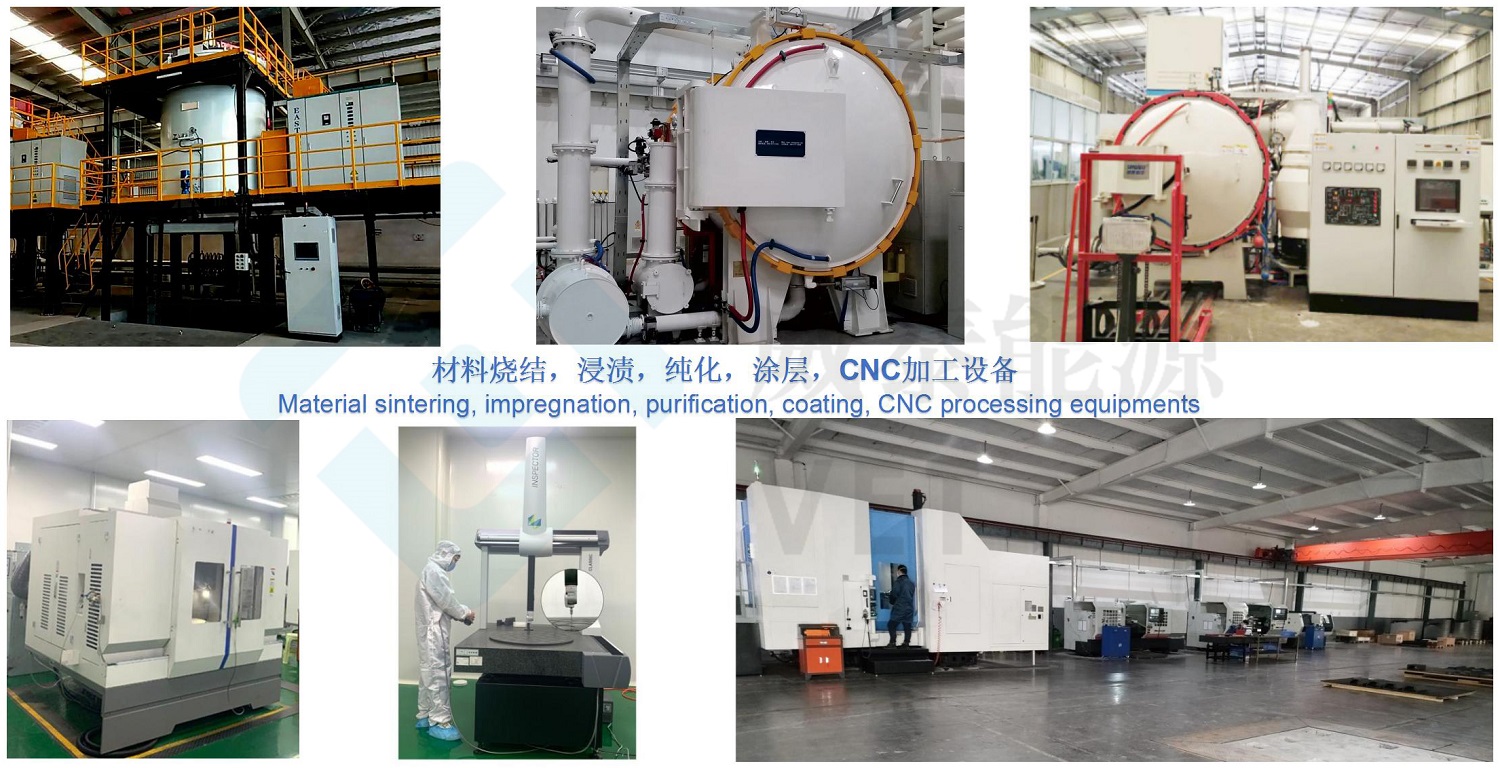
VET Energy employs a meticulous process to produce High Purity CVD Solid SiC Bulk. You will appreciate the use of the Chemical Vapor Deposition (CVD) method, which ensures ultra-high purity and density. The process begins with preparing a high-quality CVD-SiC block source. This source undergoes sublimation in a controlled environment, transitioning from solid to vapor. It then re-condenses onto a substrate, forming high-quality SiC single crystals. VET Energy’s precise temperature management and use of inert gases prevent contamination, ensuring the integrity of the crystals.
Benefits of High Purity CVD Solid SiC Bulk in Semiconductor Manufacturing
Enhanced Thermal Conductivity for Heat Management
You know that managing heat is critical in semiconductor devices. High Purity CVD Solid SiC Bulk offers exceptional thermal conductivity, allowing you to dissipate heat efficiently. This property ensures that your devices operate at optimal temperatures, even under heavy workloads. By using this material, you reduce the risk of overheating, which can damage components and lower performance. Its ability to handle high thermal loads makes it ideal for high-power electronic devices and advanced semiconductor applications.
Durability and Stability in Extreme Conditions
When you work with semiconductor materials, durability is essential. High Purity CVD Solid SiC Bulk provides outstanding mechanical strength and chemical stability. It resists wear and tear, even in harsh environments. This material performs reliably under extreme temperatures and pressures, ensuring long-term stability. You can trust it to maintain its integrity in demanding applications, such as aerospace, automotive, and industrial electronics. Its resilience reduces the need for frequent replacements, saving you time and resources.
Precision and Scalability for Advanced Technologies
Precision is vital in modern semiconductor manufacturing. High Purity CVD Solid SiC Bulk enables you to achieve high levels of accuracy during production. Its uniformity and consistency support the growth of high-quality SiC single crystals. This precision ensures that your devices meet strict performance standards. Additionally, the material’s scalability allows you to produce components for a wide range of applications, from small sensors to large power modules. Its versatility makes it a valuable asset for advancing technology.
Comparing High Purity CVD Solid SiC Bulk with Traditional Materials
Advantages Over Silicon
When you compare silicon with High Purity CVD Solid SiC Bulk, the differences become clear. Silicon struggles to handle high temperatures and power levels. Its thermal conductivity is lower, which makes it less effective at dissipating heat. This limitation can lead to overheating and reduced performance in high-power applications. On the other hand, silicon carbide offers superior thermal conductivity, allowing you to manage heat more efficiently. This makes it ideal for devices that operate under heavy workloads.
Silicon also lacks the mechanical strength needed for extreme conditions. It can crack or degrade when exposed to high stress or harsh environments. High Purity CVD Solid SiC Bulk provides the durability you need for long-term reliability. Its chemical stability ensures it performs consistently, even in challenging settings. These advantages make it a better choice for advanced semiconductor technologies.
Advantages Over Silicon Carbide Composites
Silicon carbide composites offer some benefits, but they fall short in key areas. Composites often contain impurities that can affect the quality of the final product. You may find that these impurities lead to inconsistencies in performance. High Purity CVD Solid SiC Bulk eliminates this issue by maintaining ultra-high purity. This ensures that your devices achieve optimal efficiency and reliability.
Composites also lack the uniformity required for precision applications. Their structure can vary, making it harder to produce consistent results. High Purity CVD Solid SiC Bulk provides a uniform and dense material, which supports the growth of high-quality single crystals. This precision is essential for cutting-edge technologies like high-power electronics and sensors. By choosing this material, you gain a competitive edge in semiconductor manufacturing.
High Purity CVD Solid SiC Bulk transforms semiconductor production. You gain unmatched thermal conductivity, durability, and precision for advanced applications. This material helps you achieve higher efficiency and reliability. As technology advances, adopting it ensures you stay competitive in manufacturing. Explore its potential to elevate your projects and meet future demands.
FAQ
What makes High Purity CVD Solid SiC Bulk unique?
High Purity CVD Solid SiC Bulk offers unmatched thermal conductivity, durability, and chemical stability. Its ultra-high purity ensures consistent performance in advanced semiconductor applications.
How does this material improve semiconductor manufacturing?
You achieve better heat management, precision, and scalability with this material. Its properties enhance device reliability and efficiency, especially in high-power and extreme-condition applications.
Can High Purity CVD Solid SiC Bulk replace traditional materials?
Yes, it outperforms silicon and silicon carbide composites. Its superior thermal conductivity, durability, and purity make it a better choice for cutting-edge technologies.