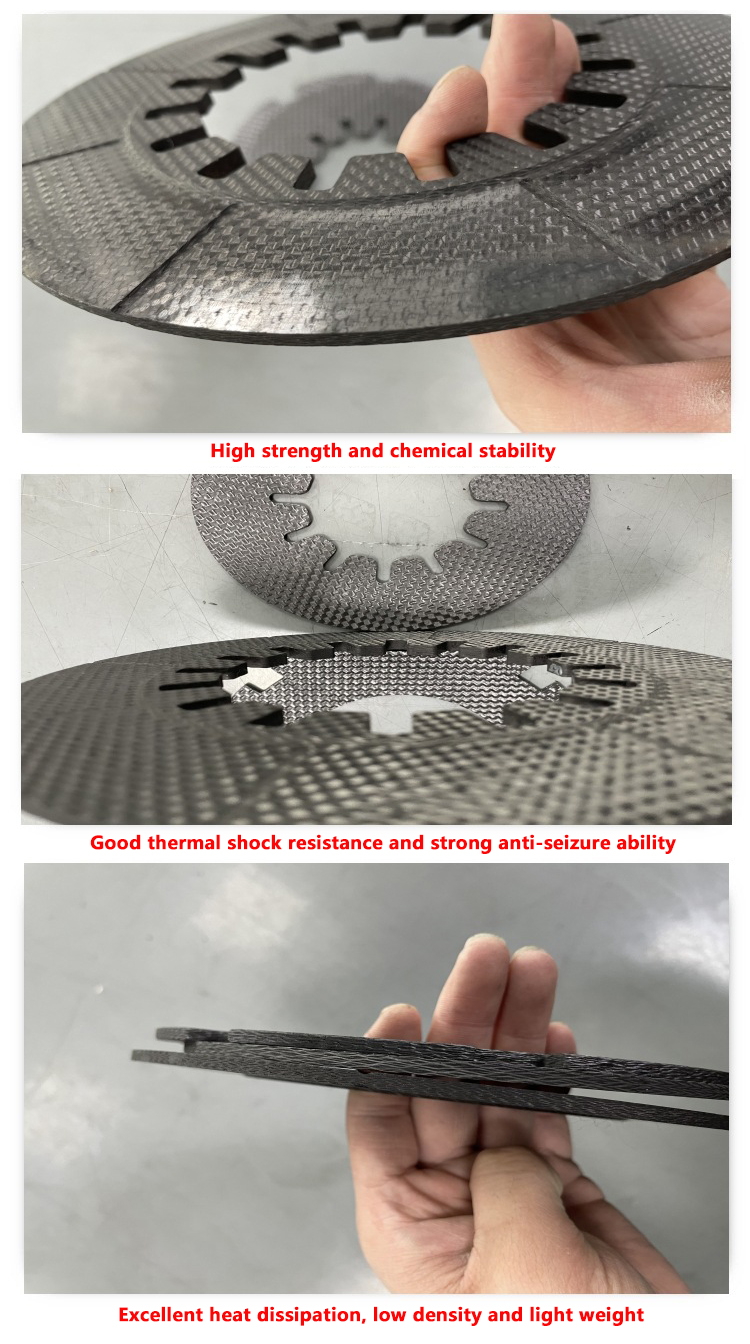
2.5D 3D Carbon Fiber Composite C/C Brake Pad CFC Disc

Carbon Fiber Composites (C/C) are a new generation of brake materials, replacing metal-based composites due to their exceptional mechanical, thermal, and friction properties.

Key features include:

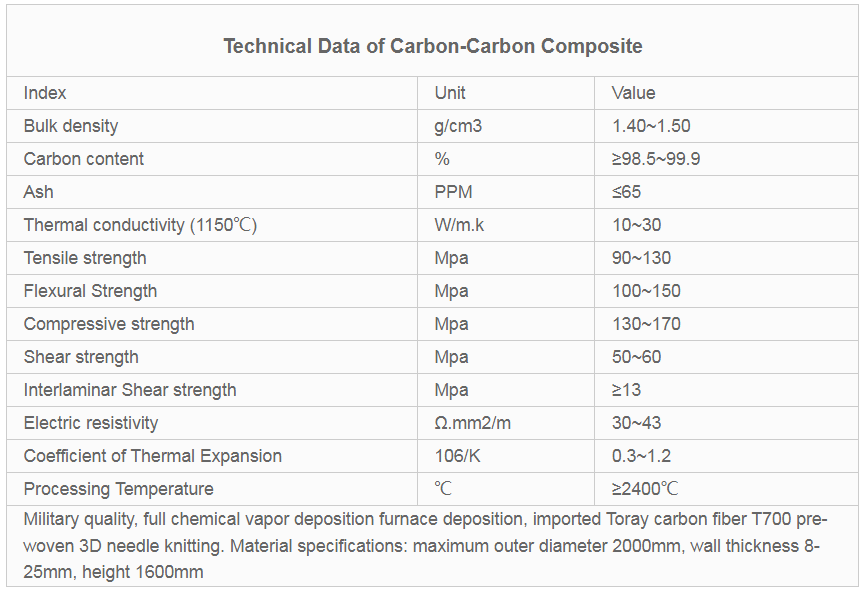
  1. Low density (1.5g/cm³), reducing brake disc mass.
  2. Superior wear resistance, lasting twice as long as metal composites.
  3. Stable dynamic friction, excellent anti-sticking and anti-adhesion.
  4. Simplified design without additional components like friction linings.
  5. Small thermal expansion, high specific heat capacity, and thermal conductivity.
  6. High working temperature and heat resistance up to 2700℃.
More Posts

The Zero-Particle Mission: Why Sub-5ppm Purity is the Foundation of Advanced Epitaxy

In 2026, as wide-bandgap semiconductors power everything from advanced AI servers to 800V automotive inverters, the margins for error have completely vanished. While chip designers push for higher efficiency, fab engineers face a daily battle against a microscopic enemy: contamination and micro-particles inside the process chamber. During high-temperature epitaxy, the standard of your graphite consumables directly dictates your final wafer defect density.

Maximizing ROI: The Financial Logic of Switching to TaC Coatings

In the competitive semiconductor landscape, the “initial purchase price” is often a misleading metric. For manufacturers scaling up to 8-inch SiC/GaN production, true profitability is found in Total Cost of Ownership (TCO).

At Vetek Semiconductor, we advocate for Tantalum Carbide (TaC) not just as a technical upgrade, but as a strategic financial decision to lower your Cost per Wafer.

Why TaC Coating is a Game-Changer for High-Temp Nitrogen Processes

In the world of semiconductor manufacturing, heat is the enemy of stability. As we move toward larger 8-inch wafers, traditional coatings are reaching their limits.

At Vetek Semiconductor, we’ve found that TaC (Tantalum Carbide) is the ultimate solution for longevity, especially in nitrogen (N2) environments.

Beyond Silicon: Why TaC Coating is Becoming the Gold Standard for 2000°C+ Environments

In the rapidly evolving power electronics landscape of 2026, we are pushing wide-bandgap semiconductors to their physical limits. As the demand for higher growth rates and superior crystalline quality intensifies, the industry is moving toward higher processing temperatures—often exceeding 2000°C. At these extremes, traditional materials fail, and Tantalum Carbide (TaC) coating emerges as the critical enabler.

Send Us A Message

es_ESSpanish

Looking forward to your contact with us

Let's have a chat