
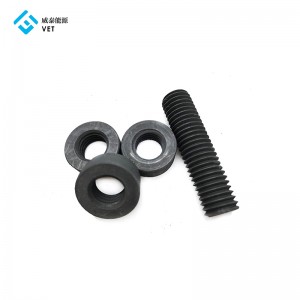
Graphite bolts provide exceptional performance in challenging environments. With their high carbon composition, these Graphite Bolts&Nuts offer outstanding heat resistance, featuring a thermal resistance of 0.2 K∙cm²/W and an operating temperature range from –55 to 400 ℃. Ningbo VET Co.,LTD meticulously engineers each Graphite Bolt and Graphite Screw to thrive in industrial applications, delivering unparalleled durability, corrosion resistance, and mechanical strength. These Carbon Screws are the ideal solution for industries requiring reliable and high-performing fasteners.
Key Takeaways
- Graphite bolts handle very high heat, perfect for hot places like furnaces.
- They resist rust and damage, lasting longer in tough chemicals.
- Graphite bolts are light, easy to install, and save time at work.
Key Properties of Graphite Bolts
High Temperature Resistance
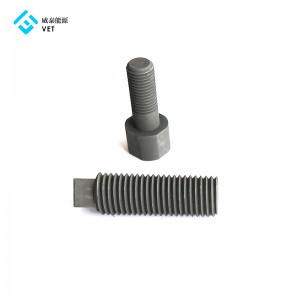
Graphite bolts excel in high-temperature environments due to their remarkable thermal stability. These bolts can endure extreme heat without losing their structural integrity. Laboratory tests have demonstrated their ability to maintain flexural strength even at elevated temperatures. For instance, at 1,000°C, graphite bolts exhibit a flexural strength of 32 MPa and a fracture toughness of 2–3 MPa√m, compared to 25 MPa and 1–1.5 MPa√m at room temperature. This resilience makes them indispensable in applications such as industrial furnaces and vacuum systems, where traditional materials often fail.
Superior Corrosion Resistance
The chemical composition of graphite bolts, with over 99% carbon, provides exceptional resistance to corrosion. Unlike metals, graphite does not react with most acids, alkalis, or other corrosive substances. This property ensures long-term performance in environments exposed to harsh chemicals or moisture. Industries such as chemical processing and manufacturing benefit significantly from this resistance, as it reduces maintenance costs and enhances operational efficiency.
Exceptional Mechanical Strength and Durability
Graphite bolts combine mechanical strength with durability, making them suitable for demanding applications. Micro-Raman spectroscopy has revealed how stress-induced dislocations in graphite enhance its mechanical behavior. These dislocations strengthen the material, allowing it to withstand high compressive forces ranging from 50 to 90 MPa. This unique property ensures reliability in critical applications, such as aerospace and energy generation, where mechanical failure is not an option.
Lightweight and Easy to Handle
Despite their strength, graphite bolts are lightweight, with a bulk density of 1.67 to 1.77 g/cm³. This characteristic simplifies handling and installation, reducing labor costs and improving efficiency. Their lightweight nature also makes them ideal for applications where weight reduction is crucial, such as in aviation and space exploration. Additionally, their ease of use contributes to faster assembly times, enhancing productivity in industrial settings.
Performance in Extreme Environments
Withstanding High Temperatures
Graphite bolts demonstrate exceptional performance in high-temperature environments. Their ability to withstand temperatures ranging from 300°C to 1,000°C ensures reliability in applications such as industrial furnaces and vacuum systems. Unlike traditional materials, graphite bolts maintain their structural integrity under extreme heat. This thermal stability reduces the risk of deformation or failure, making them indispensable in industries requiring consistent performance at elevated temperatures.
Resisting Chemical and Environmental Exposure
The chemical resistance of graphite bolts makes them ideal for environments exposed to corrosive substances. Their high carbon composition prevents reactions with most acids, alkalis, and other chemicals. This property ensures long-term durability in industries such as chemical processing and manufacturing. Additionally, graphite bolts resist environmental factors like moisture and oxidation, further enhancing their lifespan in harsh conditions.
Ensuring Longevity in Harsh Conditions
Graphite bolts offer unmatched durability in extreme environments. Their compressive strength, ranging from 50 to 90 MPa, allows them to endure significant mechanical stress. This strength, combined with their resistance to thermal shock and oxidation, ensures longevity even in the most demanding applications. Industries such as aerospace and energy generation benefit from their reliability, reducing maintenance needs and operational downtime.
Electrical Conductivity for Specialized Applications
Graphite bolts also excel in applications requiring electrical conductivity. Their unique properties make them suitable for specialized uses in electronics and energy systems. The table below highlights the conductivity measurements of different graphite grades:
| Graphite Grade | Electrical Resistivity (µΩ-cm) | Thermal Conductivity (W/m-K) |
|---|---|---|
| SCF Graphite | 2450 | 50 |
| PLS Graphite | 1460 | 105 |
These measurements demonstrate the versatility of graphite bolts in environments where efficient electrical and thermal performance is critical.
Advantages Over Other Materials
Graphite Bolts vs. Steel Bolts
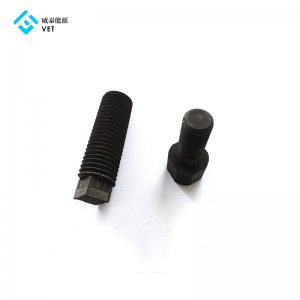
Graphite bolts outperform steel bolts in several critical aspects. Steel bolts, while strong, are prone to corrosion when exposed to moisture or chemicals. In contrast, graphite bolts exhibit superior corrosion resistance due to their high carbon composition. This makes them ideal for environments with harsh chemical exposure. Additionally, graphite bolts maintain their structural integrity at temperatures where steel bolts may weaken or deform. Their lightweight nature also provides an advantage, as it simplifies handling and reduces installation time. These features make graphite bolts a more reliable choice for industries requiring high-performance fasteners.
Graphite Bolts vs. Titanium Bolts
Titanium bolts are known for their strength and corrosion resistance, but graphite bolts offer unique advantages. Graphite bolts can withstand higher temperatures, making them suitable for extreme heat applications like industrial furnaces. Their thermal stability ensures consistent performance where titanium may falter. Furthermore, graphite bolts are more cost-effective over time. While titanium bolts have a higher initial cost, graphite bolts require less maintenance due to their durability and resistance to wear. This results in long-term savings for industries that prioritize efficiency and reliability.
Why Graphite Bolts Are the Optimal Choice
Graphite bolts combine strength, durability, and resistance to extreme conditions, making them the optimal choice for demanding applications. Their lightweight design enhances maneuverability, while their heat and corrosion resistance reduce maintenance needs. Industries benefit from their long lifespan and consistent performance under stress. Although the initial investment may be higher, the cost savings from reduced maintenance and extended durability make graphite bolts a superior fastening solution.
Applications of Graphite Bolts
Industrial Furnaces and Vacuum Furnaces
Graphite bolts play a critical role in industrial and vacuum furnaces. Their ability to withstand extreme temperatures, ranging from 300°C to 1,000°C, ensures reliable performance in high-heat environments. These bolts maintain structural integrity even under prolonged exposure to intense heat, making them indispensable for securing components in furnaces. Their lightweight nature simplifies installation, while their resistance to thermal shock enhances durability. Industries relying on high-temperature processes, such as metallurgy and heat treatment, benefit significantly from the use of graphite bolts.
Aerospace and Aviation
The aerospace and aviation sectors demand materials that combine strength, lightweight properties, and resistance to extreme conditions. Graphite bolts meet these requirements, making them ideal for use in aircraft and spacecraft components. Their high compressive strength ensures reliability under mechanical stress, while their lightweight design reduces overall weight, improving fuel efficiency. Additionally, their resistance to oxidation and thermal shock ensures longevity in environments with fluctuating temperatures and pressures. These properties make graphite bolts a preferred choice for critical aerospace applications.
Chemical Processing and Manufacturing
Graphite bolts excel in chemical processing and manufacturing environments due to their exceptional corrosion resistance. Their high carbon composition prevents reactions with most acids, alkalis, and other corrosive substances. This ensures long-term durability and reduces maintenance costs. Common applications include heat exchangers and measuring instruments, as shown in the table below:
| Application Area | Description |
|---|---|
| Heat Exchangers | Used in heat exchangers and other chemical apparatus elements. |
| Measuring Instruments | Employed in various measuring instrument components. |
These versatile applications highlight the importance of graphite bolts in maintaining operational efficiency in chemical industries.
Energy and Power Generation
Energy and power generation industries require materials that can endure harsh conditions while maintaining performance. Graphite bolts provide the necessary strength and durability for applications such as securing components in turbines, reactors, and other energy systems. Their resistance to high temperatures and corrosive environments ensures reliability in both conventional and renewable energy systems. Furthermore, their electrical conductivity makes them suitable for specialized applications in power generation, such as in electrical connections and thermal management systems.
Graphite bolts deliver unmatched performance in harsh environments, combining heat resistance, corrosion resistance, and mechanical strength. Their low friction coefficient and temperature stability make them ideal for demanding applications. The growing demand for graphite-based solutions highlights their reliability. Ningbo VET Co.,LTD ensures top-quality graphite bolts, meeting the needs of industries worldwide.
FAQ
What makes graphite bolts suitable for high-temperature applications?
Graphite bolts withstand temperatures up to 1,000°C due to their exceptional thermal stability. This property ensures reliable performance in industrial furnaces and other high-heat environments.
How do graphite bolts resist corrosion in chemical industries?
Graphite bolts, composed of over 99% carbon, resist reactions with acids, alkalis, and chemicals. This feature ensures durability and reduces maintenance in corrosive environments.
Are graphite bolts lightweight compared to traditional materials?
Yes, graphite bolts are lightweight, with a bulk density of 1.67–1.77 g/cm³. Their reduced weight simplifies handling and installation, improving efficiency in industrial applications.