
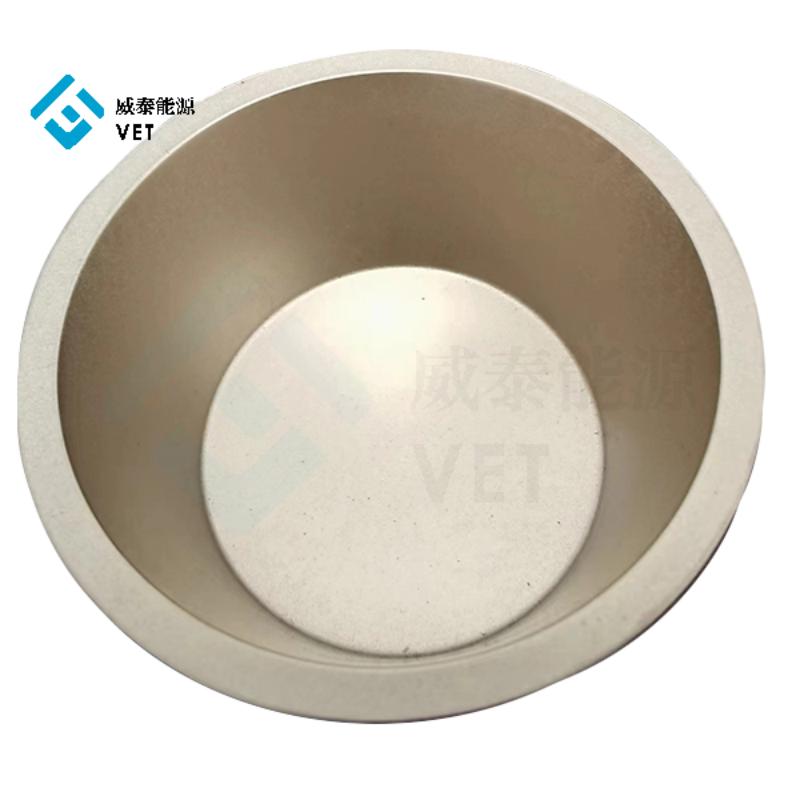
TAC coatings, composed of tantalum carbide, exhibit remarkable chemical and physical properties. Their tetrahedral bonding and amorphous microstructure enhance durability and adaptability. These coatings deliver exceptional hardness, thermal stability, and resistance to wear and oxidation. Advanced deposition methods, such as cvd tac coating techniques, enable precise application, making them indispensable in high-performance industries.
Key Takeaways
- TAC coatings are made from tantalum carbide, which is very hard and resists wear. This makes them great for tough jobs.
- These coatings stay stable even in heat over 3000°C. They work well in harsh places like airplanes and factory machines.
- TAC coatings resist chemicals, stopping rust and damage. This helps parts last longer in many industries.
Chemical Structure of TAC Coatings
Composition and Atomic Arrangement
TAC Coatings consist primarily of tantalum and carbon atoms. These elements combine to form tantalum carbide, a compound known for its exceptional strength and stability. The atomic arrangement within TAC Coatings exhibits a unique crystalline or amorphous structure, depending on the deposition process. In crystalline forms, tantalum and carbon atoms align in a highly ordered lattice, creating a dense and robust material. Amorphous structures, on the other hand, lack long-range order, offering greater flexibility in tailoring properties for specific applications. This versatility in atomic arrangement allows engineers to optimize TAC Coatings for diverse industrial needs.
Tetrahedral Bonding
The chemical structure of TAC Coatings is defined by strong tetrahedral bonding between tantalum and carbon atoms. These covalent bonds contribute significantly to the material’s hardness and resistance to deformation. Tetrahedral bonding also enhances the coating’s ability to withstand extreme mechanical stresses. This characteristic makes TAC Coatings an ideal choice for environments requiring high durability, such as aerospace and automotive industries. The strength of these bonds ensures that the coatings maintain their integrity even under prolonged exposure to harsh conditions.
Microstructure and Tailored Properties
The microstructure of TAC Coatings plays a crucial role in determining their performance. By adjusting deposition parameters, manufacturers can control grain size, density, and surface morphology. Fine-grained microstructures improve hardness and wear resistance, while denser coatings enhance thermal and chemical stability. This ability to tailor properties enables TAC Coatings to meet the specific demands of applications ranging from cutting tools to semiconductor components. The adaptability of the microstructure underscores the material’s versatility and value in high-performance industries.
Performance Advantages of TAC Coatings
Hardness and Wear Resistance
TAC Coatings exhibit exceptional hardness, making them highly resistant to wear and abrasion. The strong covalent bonds between tantalum and carbon atoms create a durable surface that withstands mechanical stress. This property extends the lifespan of components exposed to friction, such as cutting tools and industrial machinery. Engineers often select TAC Coatings for applications where prolonged contact or repetitive motion could degrade uncoated materials. Their ability to maintain structural integrity under such conditions ensures consistent performance over time.
Thermal Stability at Ultra-High Temperatures
TAC Coatings demonstrate remarkable thermal stability, even at temperatures exceeding 3000°C. This characteristic makes them ideal for environments involving extreme heat, such as aerospace propulsion systems and high-temperature furnaces. Unlike many materials that degrade or lose strength under intense heat, TAC Coatings retain their mechanical properties. This stability reduces the risk of failure in critical applications, ensuring safety and reliability in demanding conditions.
Oxidation and Chemical Resistance
The chemical composition of TAC Coatings provides excellent resistance to oxidation and corrosive substances. When exposed to oxygen-rich or chemically aggressive environments, these coatings form a protective barrier that prevents degradation. This resistance makes them suitable for industries like electronics manufacturing, where exposure to reactive chemicals is common. By preserving the integrity of coated surfaces, TAC Coatings enhance the durability and functionality of components.
Ablation Resistance in Extreme Environments
TAC Coatings excel in protecting surfaces from ablation, a process where material erodes due to high heat and pressure. This property is particularly valuable in aerospace applications, such as thermal protection systems for spacecraft reentry. The coatings act as a shield, minimizing material loss and maintaining structural performance. Their ability to endure such extreme conditions underscores their importance in cutting-edge technologies.
Applications of TAC Coatings
Automotive and Aerospace
TAC Coatings play a critical role in the automotive and aerospace industries. Their exceptional hardness and wear resistance make them ideal for protecting engine components, turbine blades, and other high-stress parts. These coatings reduce friction and extend the lifespan of moving parts, enhancing overall efficiency. In aerospace applications, TAC Coatings withstand extreme temperatures and resist oxidation, ensuring reliability in propulsion systems and thermal protection systems. Their ability to endure harsh environments makes them indispensable for advanced transportation technologies.
Medical Devices and Tools
The medical industry benefits significantly from the unique properties of TAC Coatings. Their biocompatibility and resistance to corrosion make them suitable for surgical instruments, implants, and diagnostic tools. These coatings provide a hard, smooth surface that resists wear and maintains sterility, even after repeated sterilization cycles. TAC Coatings also enhance the performance of cutting tools used in precision surgeries, ensuring accuracy and durability. Their application in medical devices improves patient outcomes and reduces maintenance costs.
Electronics and Semiconductor Manufacturing
TAC Coatings contribute to the advancement of electronics and semiconductor manufacturing. Their chemical resistance and thermal stability protect components exposed to aggressive chemicals and high temperatures during production processes. These coatings prevent contamination and ensure the integrity of delicate surfaces, such as wafers and circuit boards. By enhancing durability and performance, TAC Coatings support the development of smaller, more efficient electronic devices.
Industrial Machinery and High-Performance Tools
Industrial machinery and high-performance tools rely on TAC Coatings for improved durability and efficiency. These coatings protect cutting tools, molds, and dies from wear and deformation, even under intense mechanical stress. Their hardness and resistance to abrasion reduce downtime and maintenance costs in manufacturing operations. TAC Coatings also enhance the performance of tools used in mining, construction, and other heavy industries, ensuring consistent results in demanding environments.
Challenges and Future Trends in TAC Coatings
Current Limitations in Deposition Techniques
Deposition techniques for TAC coatings, such as chemical vapor deposition (CVD) and physical vapor deposition (PVD), face several challenges. These methods often require high temperatures, which can limit their compatibility with certain substrates. Additionally, achieving uniform coating thickness on complex geometries remains difficult. Scaling these processes for large-scale industrial applications also presents cost and efficiency concerns. Researchers continue to explore ways to optimize deposition parameters to overcome these limitations.
Note: Improving deposition techniques could unlock new applications for TAC coatings in industries requiring precision and scalability.
Innovations in Chemical Vapor Deposition (CVD)
Recent advancements in CVD technology aim to address existing challenges. Low-temperature CVD processes now enable TAC coatings to be applied to temperature-sensitive materials. Plasma-enhanced CVD (PECVD) has emerged as a promising technique, offering better control over coating properties. These innovations enhance the adaptability of TAC coatings, making them suitable for a broader range of applications. Engineers are also experimenting with hybrid deposition methods to combine the strengths of multiple techniques.
Emerging Applications in Extreme Environments
TAC coatings are finding new uses in extreme environments, such as nuclear reactors and deep-space exploration. Their ability to withstand high radiation levels and thermal shocks makes them ideal for these demanding conditions. In the energy sector, TAC coatings protect components in high-pressure and high-temperature systems. These emerging applications highlight the growing importance of TAC coatings in cutting-edge technologies.
Sustainability and Environmental Impact
The production of TAC coatings raises concerns about energy consumption and waste generation. Researchers are developing eco-friendly deposition methods to reduce the environmental footprint. Recycling tantalum from end-of-life products offers another avenue for sustainability. By addressing these issues, the industry can align with global efforts to promote green manufacturing practices. 🌱
Tip: Adopting sustainable practices not only benefits the environment but also enhances the long-term viability of TAC coating technologies.
The chemical structure of TAC coatings, characterized by tetrahedral bonding and tailored microstructures, directly influences their exceptional performance. Industries requiring durability, thermal stability, and chemical resistance rely on these coatings for critical applications. Future advancements in deposition techniques and sustainable practices promise to expand their capabilities, solidifying their role in cutting-edge technologies. 🌟