
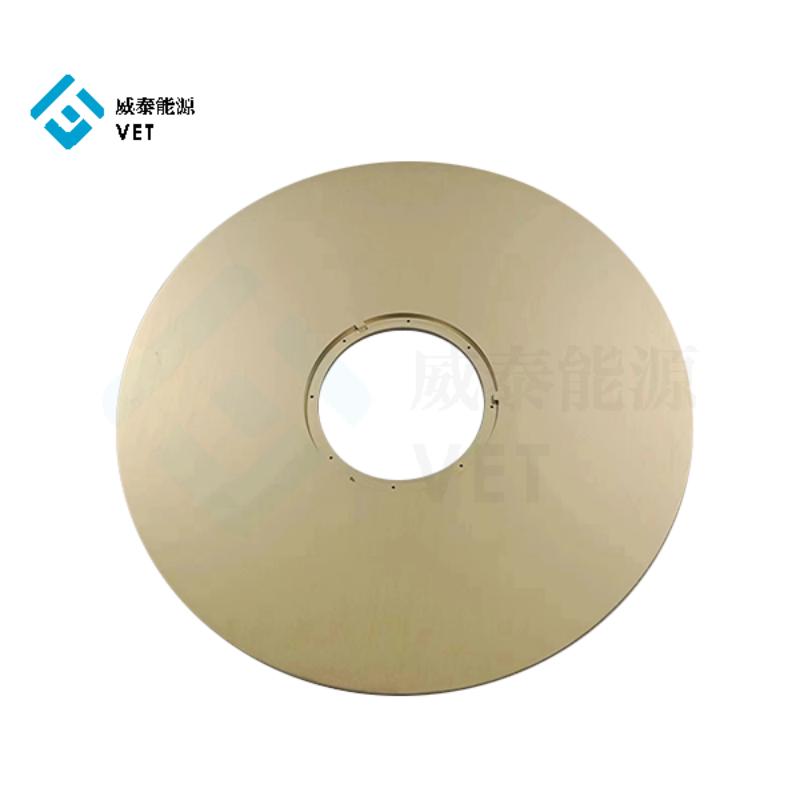
TAC Coating acts as a nanoscale shield that protects materials with unmatched hardness and wear resistance. You can rely on it to maintain performance in extreme conditions. Its thermal stability ensures durability under high temperatures. The cvd tac coating process enables precise application, making it a game-changer for advanced manufacturing. This innovation drives technological progress.
Key Takeaways
- TAC Coating is very strong and lasts longer, helping tools and parts work better in tough places.
- It stays stable in heat, so it works well in planes and cars.
- TAC Coating stops chemicals from causing damage, keeping materials safe and helping the environment.
Benefits of TAC Coating in Nanoscale Protection
Exceptional Hardness and Wear Resistance
You need materials that can withstand constant wear and tear. TAC Coating provides exceptional hardness, making surfaces more resistant to scratches and abrasions. This property ensures that tools, components, and devices last longer, even in demanding environments. For example, cutting tools coated with TAC Coating maintain their sharpness over extended use, reducing the need for frequent replacements.
Tip: If you work in industries like manufacturing or engineering, using TAC Coating can significantly improve the lifespan of your equipment.
The wear resistance of TAC Coating also minimizes surface degradation. This feature is crucial for applications where precision and reliability are non-negotiable, such as in medical devices or aerospace components.
Thermal Stability and High-Temperature Performance
High temperatures can weaken most materials, but TAC Coating excels in such conditions. It retains its protective properties even when exposed to extreme heat. This makes it ideal for industries like aerospace, where components face intense thermal stress during operation.
You can rely on TAC Coating to maintain structural integrity and performance in high-temperature environments. For instance, turbine blades coated with TAC Coating resist thermal damage, ensuring consistent efficiency and safety.
Note: Thermal stability not only enhances performance but also reduces the risk of material failure, which can lead to costly repairs or downtime.
Enhanced Chemical Resistance and Durability
Corrosive chemicals can degrade unprotected surfaces over time. TAC Coating acts as a barrier, shielding materials from chemical attacks. This resistance is especially valuable in industries like electronics and chemical processing, where exposure to harsh substances is common.
You benefit from the durability that TAC Coating provides. It ensures that components remain functional and reliable, even in chemically aggressive environments. For example, electronic devices with TAC Coating are less likely to suffer from corrosion, extending their operational life.
Did you know? TAC Coating’s chemical resistance also contributes to environmental sustainability by reducing waste from damaged or discarded materials.
Applications of TAC Coating in Advanced Manufacturing
Semiconductor Manufacturing and Process Yield Improvement
You know how critical precision is in semiconductor manufacturing. TAC Coating plays a vital role in improving process yields by protecting delicate components from wear and contamination. It creates a nanoscale barrier that reduces particle generation during wafer processing. This ensures cleaner production environments and fewer defects in microchips. By using TAC Coating, you can achieve higher efficiency and better product quality in semiconductor fabrication.
The coating also enhances the durability of tools used in lithography and etching processes. These tools maintain their performance over extended periods, reducing downtime and maintenance costs. This makes TAC Coating an essential solution for achieving consistent results in high-volume manufacturing.
Use in High-Performance Electronics and Optics
In electronics and optics, you need materials that can withstand demanding conditions. TAC Coating provides the durability and protection required for high-performance devices. It shields sensitive components, such as lenses and sensors, from scratches, heat, and chemical exposure. This ensures optimal performance and longevity.
For example, optical lenses coated with TAC Coating maintain clarity and resist damage, even in harsh environments. Similarly, electronic devices benefit from enhanced reliability, as the coating prevents corrosion and wear. This makes it a valuable addition to products like smartphones, cameras, and advanced optical systems.
Applications in Aerospace and Automotive Industries
Aerospace and automotive industries demand materials that can endure extreme conditions. TAC Coating meets these requirements by offering exceptional thermal stability and wear resistance. You can rely on it to protect engine components, turbine blades, and other critical parts from heat and friction.
In aerospace, the coating ensures the reliability of components exposed to high temperatures and mechanical stress. In automotive applications, it enhances the performance of parts like fuel injectors and piston rings. By using TAC Coating, you can improve the efficiency and lifespan of vehicles and aircraft, reducing maintenance needs and operational costs.
Technological Advancements Enabled by TAC Coating
Miniaturization and Precision Engineering
You know how modern technology demands smaller, more precise components. TAC Coating plays a crucial role in enabling miniaturization. Its nanoscale application ensures that even the tiniest parts receive robust protection. This is essential for industries like electronics and medical devices, where precision is non-negotiable. For example, microelectromechanical systems (MEMS) benefit from TAC Coating as it enhances their durability without adding bulk. You can achieve higher accuracy and reliability in your designs by incorporating this advanced coating.
The coating also supports precision engineering by reducing wear on intricate tools. This allows manufacturers to produce components with tighter tolerances, ensuring consistent quality. Whether you work in aerospace or consumer electronics, TAC Coating helps you push the boundaries of what’s possible in precision manufacturing.
Supporting Innovation in Emerging Technologies
Emerging technologies like quantum computing and renewable energy rely on advanced materials. TAC Coating provides the protection these materials need to perform under challenging conditions. For instance, in quantum computing, it shields sensitive components from environmental damage, ensuring stable operation. In renewable energy, it enhances the lifespan of solar panels and wind turbine parts by resisting wear and corrosion.
You can also use TAC Coating to improve the performance of next-generation devices. Its ability to withstand extreme conditions makes it ideal for applications in robotics, 5G infrastructure, and advanced sensors. By adopting this coating, you contribute to the development of groundbreaking technologies.
Economic Benefits Through Cost Efficiency and Longevity
You want solutions that save money while delivering long-term value. TAC Coating offers both. Its exceptional durability reduces the need for frequent replacements, lowering maintenance costs. For example, tools coated with TAC Coating last longer, minimizing downtime in manufacturing processes. This translates to higher productivity and lower operational expenses.
The coating also extends the lifespan of high-value components, such as aerospace parts or semiconductor tools. By investing in TAC Coating, you reduce waste and improve cost efficiency. This makes it an economically smart choice for industries aiming to balance performance with sustainability.
You’ve seen how TAC Coating enhances material performance with its unique properties. Its hardness, thermal stability, and chemical resistance make it indispensable in advanced manufacturing. By adopting this technology, you unlock new possibilities for innovation. Its potential to drive breakthroughs in precision engineering and emerging technologies ensures a future of limitless opportunities.